Latitude37 and L’Oréal Share Insights on Beauty Tech in Korea
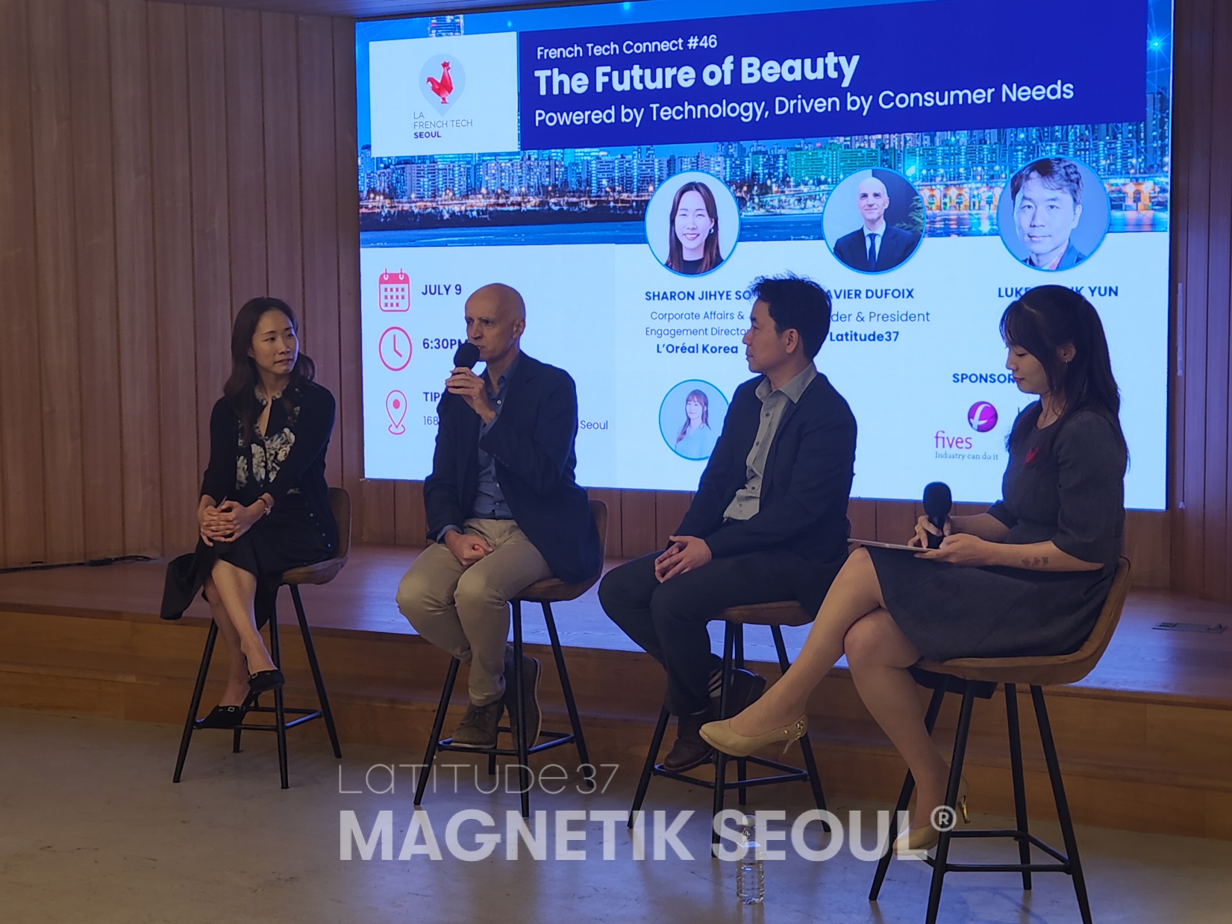
The Future of Beauty: Powered by Technology, Driven by Consumer Needs
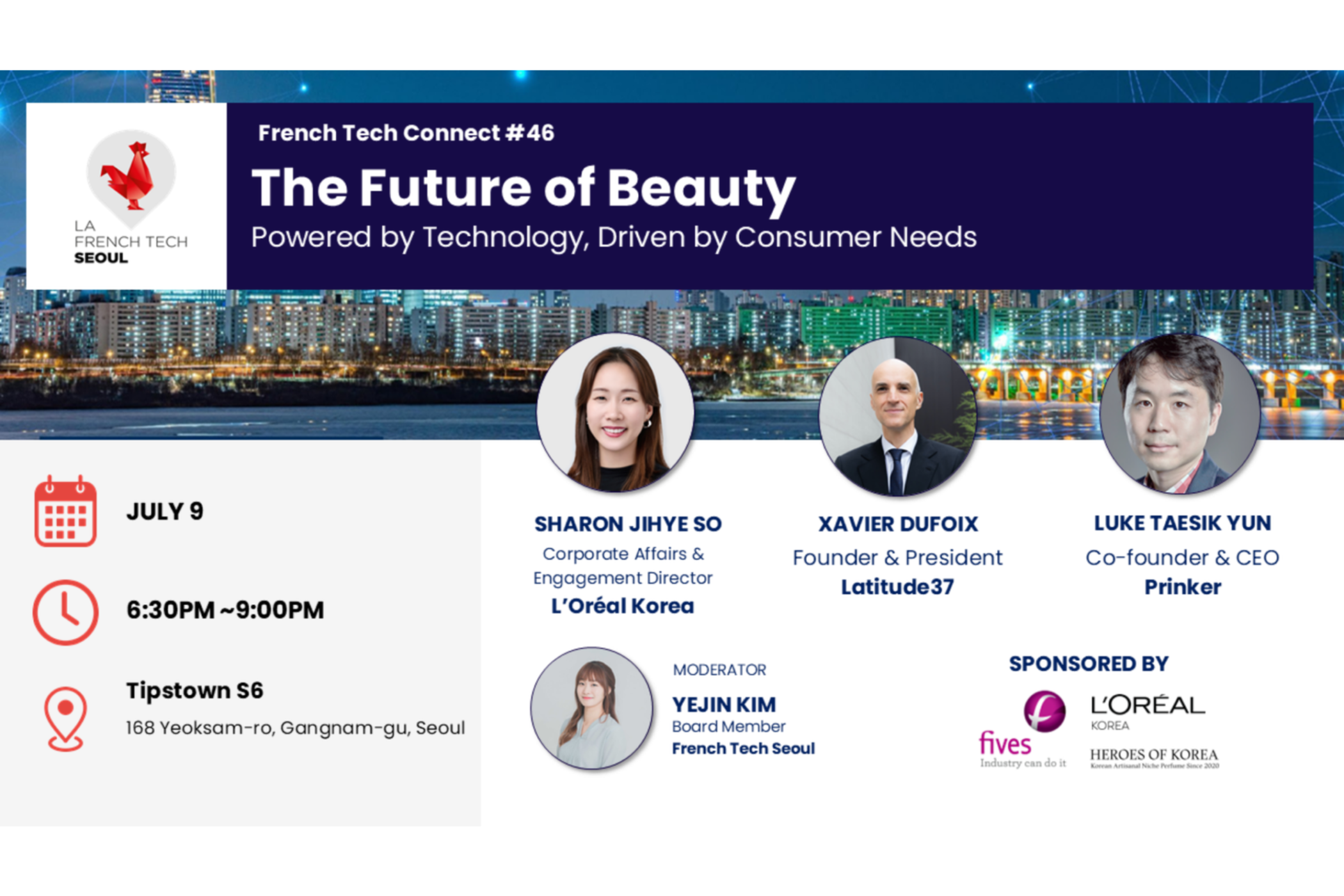
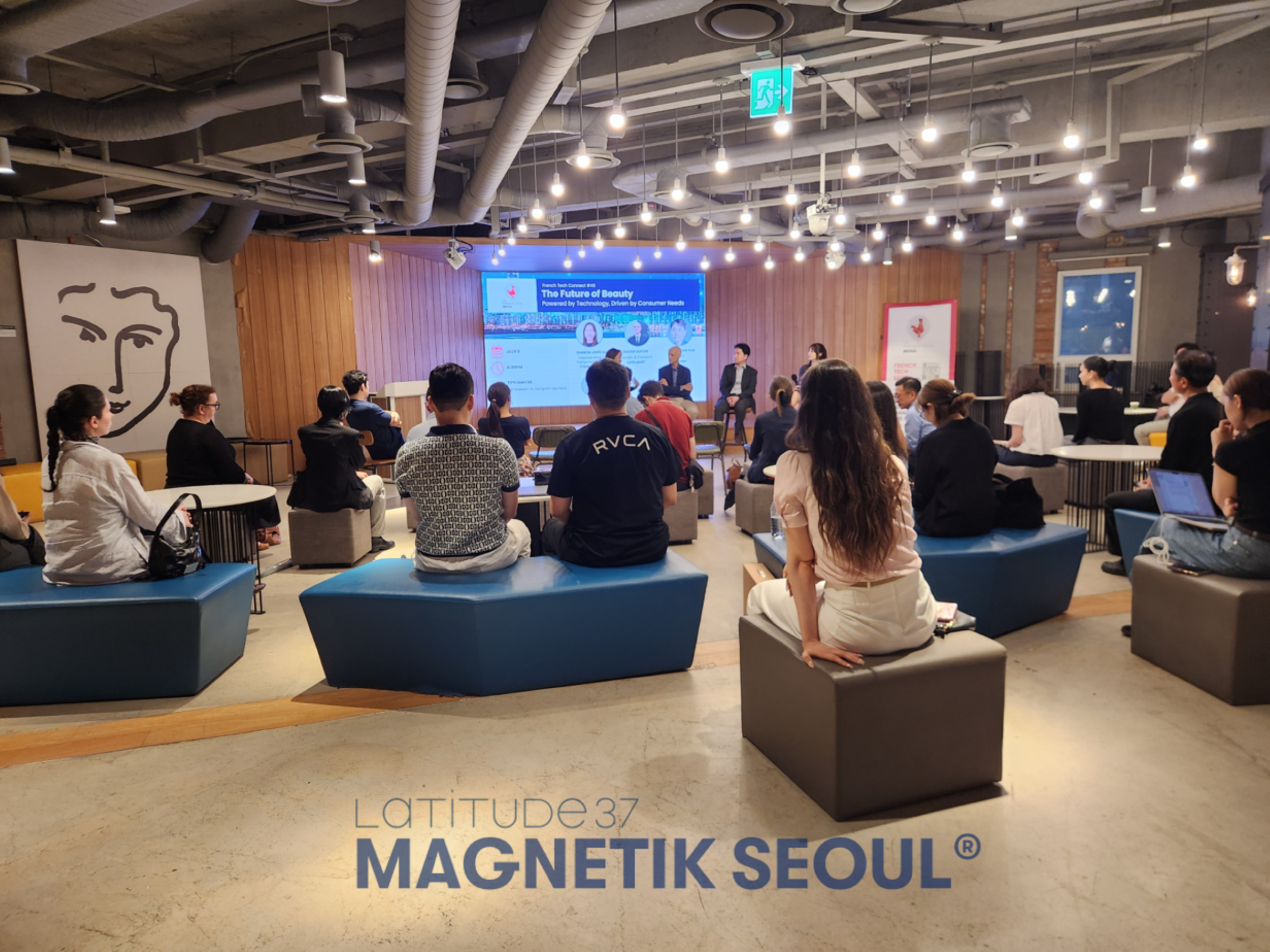
On July 9, 2026, at Tipstown in Seoul, La French Tech Seoul hosted a Beauty Tech discussion offering a cross-perspective exchange on the future of beauty.
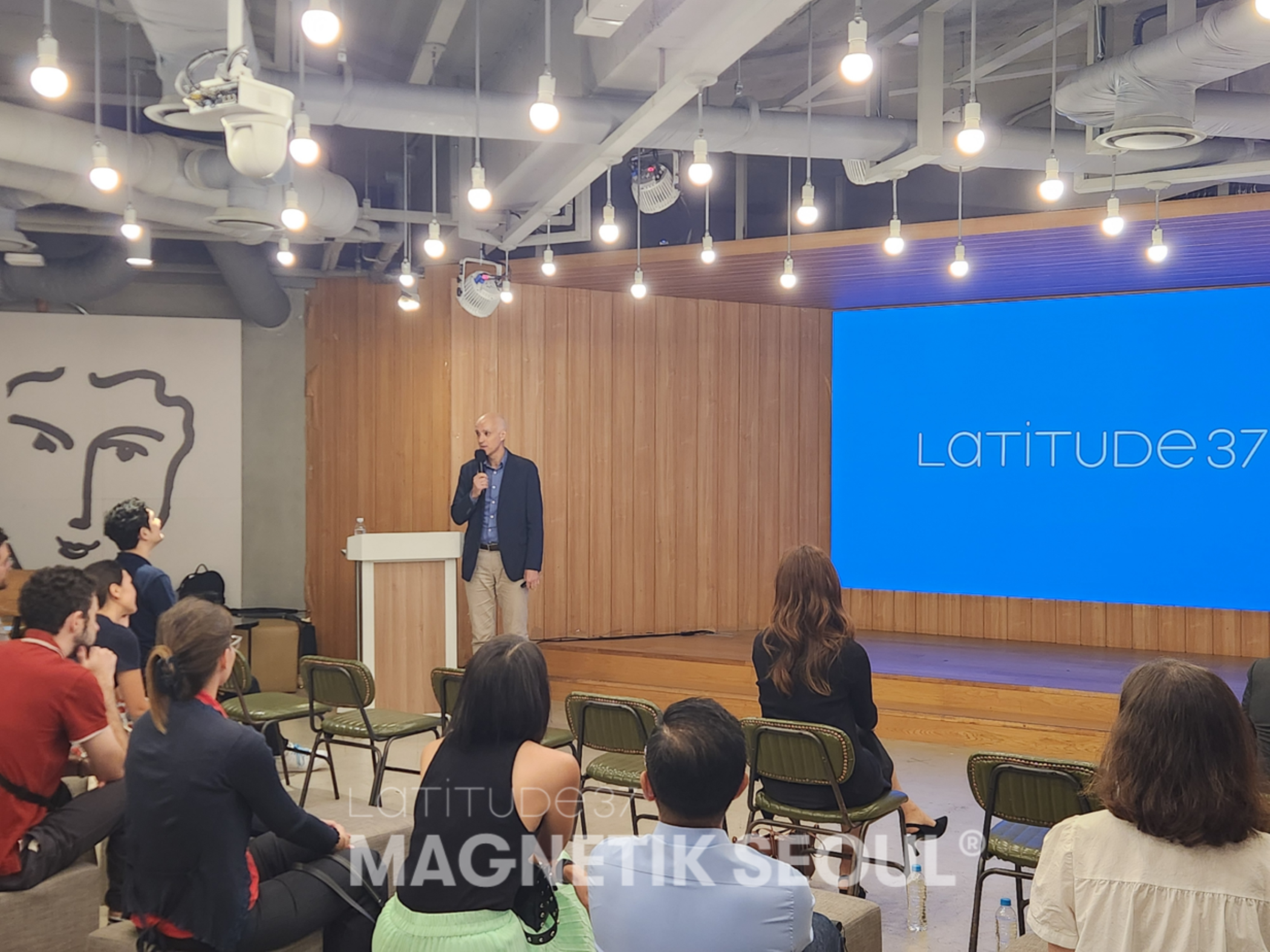
Xavier Dufoix shared Latitude37’s market insights alongside Jihye Sharon So from L’Oréal, representing the perspective of a global beauty group, and Luke Taesik Yun, Co-founder and CEO of Prinker, presenting a startup approach to beauty devices.
Our thanks to Yejin Kim, Board Member of La French Tech Seoul, for organizing the discussion and bringing these complementary perspectives together.
From Product-Centric to Journey-Centric Beauty
One of the key learnings from the exchange between L’Oréal, Latitude37, and Prinker was the growing importance of the complete beauty journey.
From Xavier’s perspective, Beauty Tech is not simply about adding technology to beauty. It is about using technology to better understand, guide, and enrich the consumer experience.
In Korea, consumers already expect diagnosis, recommendation, personalization, and purchase to be connected in one seamless experience. The focus is moving from the product itself to the way consumers discover, choose, use, and return to beauty products.
This changes the role of retail. Stores are no longer only places to sell. They are becoming laboratories where consumers test, compare, personalize, play, and decide instantly.
In Seoul, this can be seen through color consulting, customized palettes, skin diagnosis, bespoke formulas, beauty devices, and experiential flagship stores.
AI as a Personal Shopper
The insights shared during the evening also highlighted how AI is becoming a tool for guiding consumers through an over-saturated beauty market. Its role is not to show more products, but to filter, explain, and recommend better.
In practice, AI can support three key moments: understanding the consumer profile, diagnosing needs, and recommending relevant solutions. This can apply to skin, hair, color, fragrance, ingredients, or routines.
However, the algorithm alone is not enough. As reflected in the perspectives shared by L’Oréal and Latitude37, value comes from embedding technology into a credible, reassuring, and emotionally engaging experience.
Technology Can Guide, but Sensoriality Creates Attachment
Another key takeaway from the discussion was the need to balance technological precision with the sensorial dimension of beauty.
Technology can improve diagnosis, precision, education, recommendation, confidence, and convenience. It can also make the experience more playful through testing, scanning, comparing, formulating, and personalizing.
But beauty remains deeply sensory and emotional. Technology can help consumers make better choices, but it cannot fully replace the connection that makes beauty meaningful: smell, texture, gesture, pleasure, human advice, and imagination.
The future of beauty will not be fully automated. It will be more guided, more personalized, and more experiential, but still deeply human.
At Magnetik Seoul®, we believe in Beauty Tech augmented by humans and sensoriality, not fully automated beauty.
Insights
K-Beauty’s Next Scientific Chapter at in-cosmetics Korea 2026
